
Microcurrent and Gene Expression: Beyond Facial Toning
By Julia Hart, The Electric Facialist
Why Microcurrent May Be One of the Most Underestimated Technologies in Aesthetics
When most people hear the word "microcurrent," they think of facial toning and that whole "Gym for your facial muscles" vibe.
Images of lifted cheekbones, sculpted jawlines, and re-educated facial muscles dominate marketing materials. While these benefits are certainly real, they only represent a small part of the story.
Emerging research suggests that microcurrent may influence the skin on a much deeper level, affecting cellular communication, inflammation, tissue repair, and even gene expression.
This shifts microcurrent from being simply a cosmetic treatment into something far more interesting, as my instincts have always told me.
An electrophysiological intervention that communicates directly with living tissue.
To understand why this matters, we first need to understand the electrical nature of the human body.
The Human Body Is Electrical
Every cell in the human body operates through electrical gradients.
From the firing of neurons to the contraction of muscle fibres, electrical activity forms the foundation of biological communication.
Skin cells, fibroblasts, immune cells, blood vessels and connective tissue all rely upon electrical signals to coordinate healing, repair and regeneration.
This field of study is known as electrophysiology—the science of how electrical currents interact with biological tissues.
Microcurrent therapy works within this framework by delivering extremely low levels of electrical current, measured in millionths of an ampere (μA), similar to the naturally occurring currents found within the body itself.
Unlike stronger electrical stimulation devices that force muscular contractions, true microcurrent operates below the threshold of sensation, allowing it to interact with cells in a more subtle and biologically compatible manner.
Beyond Muscles: Communicating With Cells
The traditional explanation for microcurrent is muscle re-education.
While muscles are certainly influenced by electrical stimulation, the body's response to microcurrent extends far beyond muscle tissue.
Microcurrent interacts with:
- Fibroblasts
- Keratinocytes
- Endothelial cells
- Immune cells
- Lymphatic tissues
- Nerve cells
- Connective tissue
Each of these cell types relies on electrical signalling for normal function.
When applied correctly, microcurrent may help restore optimal electrical communication within tissues, supporting the body's natural repair mechanisms.
Mitochondria: The Cellular Power Plants
One of the most interesting areas of microcurrent research involves the mitochondria.
Mitochondria are responsible for producing adenosine triphosphate (ATP), the primary energy currency of the cell.
Every biological process requires ATP:
- Protein synthesis
- Collagen production
- Cellular repair
- Muscle contraction
- Nerve signalling
- DNA maintenance
- Antioxidant defence
The skin is an energy-demanding organ.
Fibroblasts continuously require ATP to manufacture collagen, elastin and extracellular matrix proteins that maintain youthful, resilient skin.
As we age, mitochondrial efficiency declines.
Reduced ATP production is now considered one of the hallmarks of ageing.
This is where microcurrent becomes particularly interesting.
The ATP Connection
One of the most frequently cited studies in microcurrent research demonstrated increases in ATP production following low-level electrical stimulation.
Researchers observed that specific microcurrent parameters increased cellular ATP production while also enhancing amino acid transport and protein synthesis.
These findings suggest that microcurrent may support the energy demands required for tissue repair and regeneration.
While increased ATP does not automatically translate into younger skin, it creates an environment where cells may function more efficiently.
In simple terms:
A cell with more available energy has greater capacity to repair, regenerate and communicate effectively.
Bring the Science Home
If you're inspired by the science behind microcurrent, you don't have to wait until your next facial.
While professional microcurrent treatments deliver higher levels of customisation and precision, home devices can become an excellent way to maintain results between appointments.
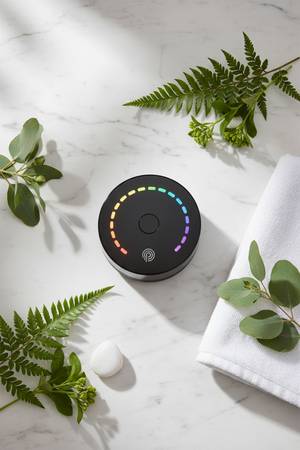
One of my favourite home technologies is the ageLOC Boost, which uses patented 8 Hz Variable Pulsed Microcurrent to energise the skin, support healthy circulation and enhance your daily skincare routine. AgeLOC means the research behind this is based on over 30 years of Epigenetic data, to positively influence gene expression.

Can Microcurrent Influence Gene Expression?
This is where the conversation becomes particularly exciting.
Gene expression refers to how cells switch genes on and off in response to environmental signals.
Every cell contains the same DNA.
What makes a fibroblast different from a muscle cell is not the genes themselves, but which genes are actively being expressed.
Research in the broader field of bioelectricity has shown that electrical signals can influence cellular behaviour, tissue organisation and regenerative pathways.
Microcurrent appears capable of influencing signalling pathways involved in:
- Tissue repair
- Inflammation regulation
- Growth factor production
- Fibroblast activity
- Extracellular matrix remodelling
Several studies have demonstrated changes in the expression of genes associated with wound healing and tissue regeneration following electrical stimulation.
While aesthetic microcurrent devices have not yet produced extensive human studies examining gene expression in ageing skin specifically, the biological mechanisms are increasingly plausible.
The growing field of electroceuticals and bioelectric medicine continues to explore how targeted electrical signals can influence cellular function at the genetic level.
Microcurrent and Inflammaging
One of the most promising areas for future research involves chronic inflammation.
Ageing is no longer viewed simply as the passage of time.
Scientists now recognise the role of low-grade chronic inflammation, often referred to as:
Inflammaging
Inflammaging contributes to:
- Collagen degradation
- Elastin breakdown
- Barrier dysfunction
- Delayed healing
- Pigmentation irregularities
- Accelerated biological ageing
Electrical stimulation has been shown in various models to influence inflammatory pathways and cytokine activity.
Some studies suggest reductions in inflammatory markers alongside improvements in tissue repair.
For skin longevity practitioners, this is particularly relevant.
The goal is no longer to create controlled injury and force repair.
Instead, the focus is increasingly shifting towards supporting optimal cellular function while reducing unnecessary inflammation.
This philosophy aligns closely with how modern microcurrent treatments are being used within regenerative aesthetics.
Want to experience professional-grade microcurrent?
My Signature Energy Facial combines advanced microcurrent with low level laser therapy, oxygen therapy and PEMF to support skin regeneration through multiple bioelectrical pathways.
The Emerging Science of Epigenetics
Epigenetics refers to the biological mechanisms that influence how genes are expressed without changing the DNA itself.
Lifestyle factors such as:
- Nutrition
- Exercise
- Sleep
- Stress
- Environmental exposures
can all influence epigenetic activity.
Researchers are now investigating whether electrical stimulation may also influence epigenetic pathways involved in tissue repair and regeneration.
While direct evidence within aesthetic microcurrent remains limited, electrical signalling is increasingly recognised as a powerful biological regulator.
The possibility that microcurrent could influence cellular behaviour through epigenetic mechanisms represents one of the most exciting frontiers in skin longevity science.
Choosing the Right Microcurrent Device Matters
Not all microcurrent devices are created equal.
Differences in:
- Waveforms
- Frequencies
- Pulse widths
- Current intensity
- Conductivity
- Biofeedback systems
may dramatically alter physiological outcomes.
Understanding electrophysiology becomes essential when selecting equipment.
A practitioner who understands current flow, tissue impedance, frequency behaviour and waveform design is far better positioned to choose a device capable of producing meaningful biological effects.
This is why studying the science behind microcurrent is just as important as learning treatment techniques.
The Future of Skin Longevity
The future of aesthetics is moving beyond superficial treatments.
Increasingly, practitioners are seeking technologies that support:
- Cellular communication
- Mitochondrial function
- Tissue regeneration
- Inflammation resolution
- Biological resilience
Microcurrent sits at the intersection of these emerging fields.
While much remains to be discovered, the science of bioelectricity suggests that microcurrent may represent far more than a muscle-toning treatment.
It may be one of the most sophisticated ways we currently have to communicate with the body's own regenerative systems.
As our understanding of electrophysiology, gene expression and bioelectric signalling continues to grow, microcurrent may become recognised not simply as an aesthetic technology, but as a valuable tool in the science of skin longevity.
Julia's Note
"One of the reasons I became fascinated by microcurrent is that it challenges the way we think about ageing. Rather than forcing change through injury or inflammation, microcurrent works with the body's own electrical language. Every cell communicates through electrical signals, and every regenerative process relies upon energy. The more I study electrophysiology, the more I believe the future of skin longevity lies not in doing more to the skin, but in helping the body function as it was designed to."
— Julia Hart, The Electric Facialist