
Eat the Rainbow: Carotenoid-Rich Foods for Skin Glow, Eye Health & Antioxidant Protection
By Julia Hart, The Electric Facialist
Colour is more than decoration — it is nutrition you can see
We have all heard the phrase “eat the rainbow”.
It sounds simple, almost too simple. But behind it is a beautiful piece of nutritional science.
The colours in fruit and vegetables are created by natural plant pigments. Some of the most important of these pigments are called Carotenoids — antioxidant compounds found in red, orange, yellow and green foods.
Carotenoids help protect plants from oxidative stress and light damage. When we eat them regularly, they become part of our own antioxidant network too.
Read more in my article "What are Carotenoids?"
This is why I love using colour as a guide.
Colour gives us clues.
Red foods often bring lycopene.
Orange foods bring beta-carotene.
Yellow and golden foods bring lutein, zeaxanthin and beta-cryptoxanthin.
Dark green foods often hide yellow carotenoids beneath their chlorophyll.
Purple and berry-coloured foods bring a broader antioxidant story.
This is skin nutrition made visible.
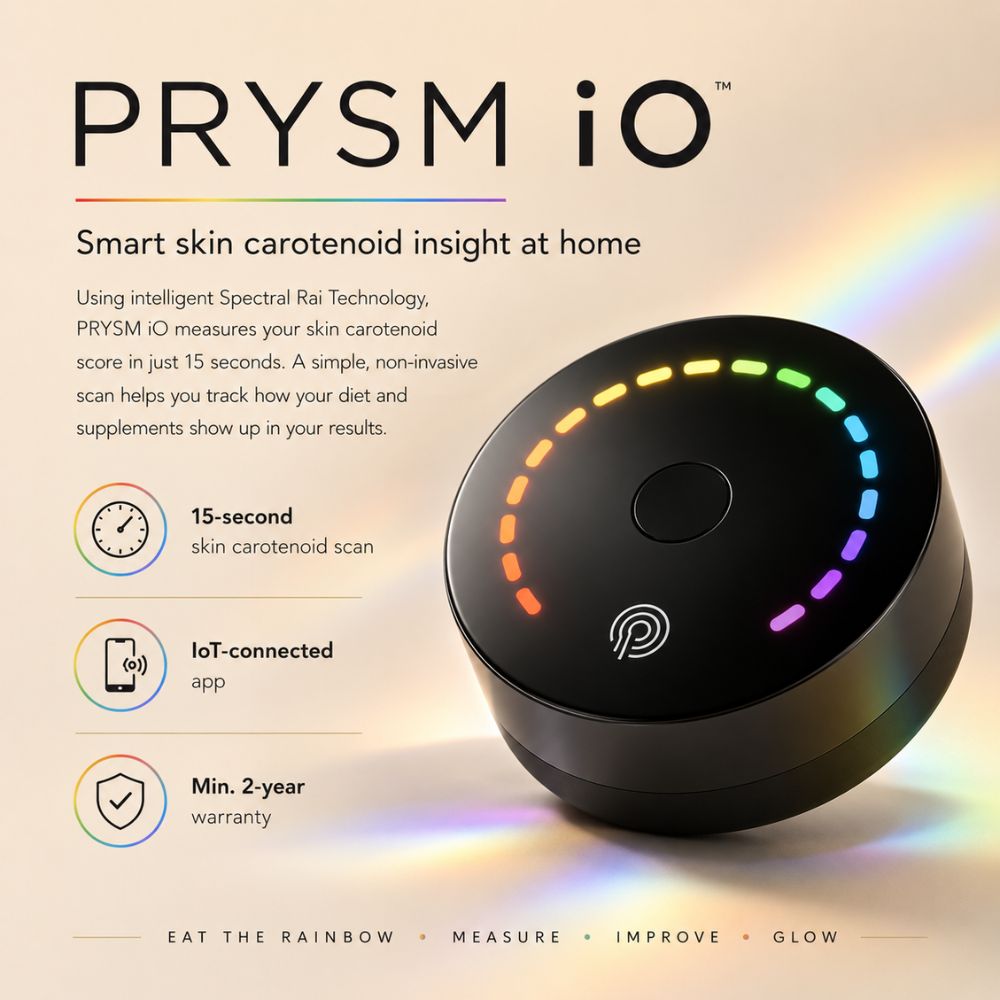
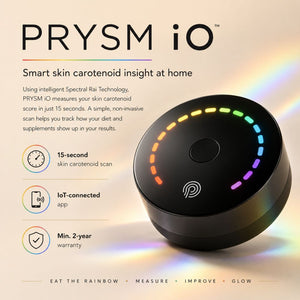
And with PRYSM iO, this becomes even more exciting because skin carotenoid status can now be measured as a biomarker-style reading of antioxidant and colourful nutrition habits.
In a PRYSM iO clinical validation study, fruit, dark-coloured vegetables, light-coloured vegetables, whole grains, freshwater fish, tubers and eggs were positively associated with higher PRYSM Scores, while fried foods and sugary drinks were negatively associated with scores.
So when I say “eat the rainbow”, I do not mean it as a vague wellness phrase.
I mean:
eat colour consistently, nourish your antioxidant network, and support your skin from within.

Red Foods: Lycopene, Skin Protection & Oxidative Stress Support
Red foods are some of the most visually powerful foods in the rainbow.
Think:
- Tomatoes
- Tomato paste
- Red peppers
- Watermelon
- Pink grapefruit
- Guava
- Papaya
- Pomegranate
- Red berries
The star carotenoid here is often Lycopene, the Red pigment most famously found in Tomatoes.
Lycopene is a fat-soluble Carotenoid antioxidant. It is especially interesting for skin health because Red and Pink Carotenoid-rich foods are strongly linked with antioxidant protection and cellular resilience.
Why red foods matter for skin
Your skin is constantly exposed to oxidative stress from UV light, pollution, inflammation, poor sleep and lifestyle pressure. Antioxidant-rich foods help support the body’s defence system against this daily stress.
Red foods are brilliant because they are often deeply pigmented and rich in protective plant compounds.
For skin, I think of Red foods as:
protection foods.
They support the idea of defending the skin from within.
Best Red Carotenoid foods
Tomatoes are the classic lycopene food. Tomato paste, tomato sauce and cooked tomato dishes can be especially useful because cooking helps release lycopene from the food matrix.
Red peppers are another beautiful red food, bringing Carotenoids, vitamin C and antioxidant support.
Guava is interesting because it can sit in both the red and orange worlds, offering Carotenoids and a naturally vibrant pigment story.
How to eat Red foods better
Because Carotenoids are fat-soluble, red foods are best eaten with healthy fats.
Try:
- Tomato sauce with olive oil
- Roasted red peppers with avocado
- Tomato salad with extra virgin olive oil
- Watermelon with a handful of nuts
- Guava with yoghurt or seeds
This is why Mediterranean-style food makes so much sense for skin health: tomatoes, olive oil, herbs and vegetables work beautifully together.

Orange Foods: Beta-Carotene, Glow & Skin Renewal
Orange foods are the classic “skin glow” foods.
Think:
- Carrots
- Pumpkin
- Sweet potato
- Butternut squash
- Cantaloupe melon
- Mango
- Apricots
- Orange peppers
- Papaya
These foods are rich in orange Carotenoids, especially beta-carotene and alpha-carotene.
Beta-carotene is a provitamin A carotenoid, meaning the body can convert some of it into vitamin A when needed. Vitamin A is important for normal skin function, immune support and cellular renewal.
Why Orange foods matter for skin
Orange foods are perfect for the “glow from within” conversation because they support the skin at a very foundational level.
They bring:
- Carotenoid antioxidant support
- provitamin A activity
- colour-linked nutritional density
- support for skin and eye health
- a visible “golden glow” food story
Best Orange Carotenoid foods
Carrots are one of the easiest daily foods to include. Pumpkin is wonderful for both beta-carotene and that rich golden-orange colour. Sweet potato is a brilliant comfort food that also supports your Carotenoid intake.
Cantaloupe, Mango and Apricots bring a softer fruit-based carotenoid profile and work beautifully in a “skin from within” breakfast or snack.
How to eat Orange foods better
Cooked orange foods often become more bioavailable when paired with fat.
Try:
- Roasted carrots with olive oil
- Pumpkin soup with coconut milk or olive oil
- Sweet potato with avocado
- Butternut squash with pumpkin seeds
- Mango with yoghurt
- Carrot and ginger soup
A raw carrot is lovely. But roasted carrots with olive oil may help you access more of the Carotenoid goodness.

Yellow & Golden Foods: Lutein, Zeaxanthin & Eye Health
Yellow and golden foods are where the story becomes especially interesting for Lutein and Zeaxanthin.
Think:
- Yellow peppers
- Sweetcorn
- Egg yolk
- Yellow carrots
- Golden squash
- Pumpkin
- Marigold-derived lutein
- Cantaloupe
- Apricots
Lutein and Zeaxanthin are xanthophyll Carotenoids, best known for their role in eye health. They are concentrated in the macula of the eye, where they help filter blue light and support visual function.
This is why I love calling lutein a glow-focused antioxidant.
It is connected to colour, light, vision, antioxidant protection and skin-from-within wellness.
Why Yellow foods matter
Yellow and Golden foods often support the skin and eye health conversation beautifully.
They are not just “pretty” foods. They are light-related foods.
They remind us that the body is constantly interacting with light — sunlight, Blue light, environmental exposure and oxidative stress.
The Marigold connection
One of my favourite Lutein stories is Marigold.
Marigolds are rich in golden-orange pigments and are a major source of lutein used in supplements. This is why Beauty Focus Collagen+ fits so beautifully into the PRYSM iO content ecosystem: it contains lutein, a carotenoid antioxidant, alongside collagen peptides and wheat lipid extract.
This gives us the perfect bridge:
PRYSM iO measures Carotenoid status.
Beauty Focus Collagen+ contains lutein.
Together, they support the “measure, nourish, glow” idea.
Learn more about Lutein in my article "Lutein and Marigolds: The Glow-Focused Carotenoid for Skin, Eyes and Beauty Focus Collagen+"
How to eat Yellow foods better
Try:
- Eggs with spinach
- Sweetcorn with olive oil or butter
- Yellow peppers in salads with avocado
- Pumpkin with seeds and olive oil
- Apricots with nuts
- Beauty Focus Collagen+ as targeted support, where appropriate
Yellow foods are perfect for the “cellular glow” message.

Green Foods: It’s Green, But It’s Really Yellow
This is one of my favourite parts of the whole article.
Dark leafy greens look Green because of chlorophyll.
But underneath that green pigment, many of them are incredibly rich in yellow Carotenoids, especially Lutein and Zeaxanthin.
So the phrase is perfect:
It’s green, but it’s really yellow.
Think:
- Kale
- Spinach
- Rocket
- Parsley
- Chard
- Collard greens
- Watercress
- Broccoli
- Spring greens
- Mustard greens
These are some of the most important foods for Lutein and Zeaxanthin intake.
Why Green foods matter for skin and eyes
Dark leafy greens are powerful because they bring Carotenoids, minerals, fibre, folate, vitamin K, vitamin C and a wide range of phytonutrients.
For skin, I think of greens as resilience foods.
They support:
- antioxidant defence
- eye health
- skin glow
- cellular nutrition
- healthy ageing
- internal repair
They also link beautifully to PRYSM iO because the clinical validation study found that dark-coloured vegetables were positively associated with PRYSM Score.
How to absorb Carotenoids from Greens
Do not eat greens completely dry.
Carotenoids are fat-soluble, so Greens are better absorbed when paired with fats.
Try:
- Spinach with eggs
- Kale with olive oil
- Rocket with avocado
- Broccoli with tahini dressing
- Chard sautéed in olive oil
- Parsley in a salad with seeds
- Greens blended into soup with olive oil
This is such an easy shift: colour plus fat equals smarter absorption.

Blue, Purple & Berry Foods: Broader Antioxidant Colour
Strictly speaking, many Blue and Purple foods are better known for polyphenols and anthocyanins rather than Carotenoids.
But I still want them in the “eat the rainbow” story because the wider goal is not just Carotenoids in isolation — it is a broad, colourful antioxidant-rich diet.
Think:
- Blackberries
- Blueberries
- Blackcurrants
- Raspberries
- Cloudberries
- Purple cabbage
- Purple carrots
- Aubergine
- Plums
- Figs
These foods bring a different colour language: deep, dark, protective and antioxidant-rich.
Why berries matter
Berries may not be your main Carotenoid food group, but they bring a huge amount to the “skin from within” story.
They are rich in protective plant compounds, often high in vitamin C, and they support the idea that colour variety matters.
For skin, I think of berries as brightening and protective foods.
How to use berries
Try:
- Berries with Greek yoghurt
- Blackberries with nuts
- Raspberries with chia pudding
- Blueberries with oats
- Blackcurrants in smoothies
- Cloudberries as a special antioxidant-rich treat
Even if they are not the main Carotenoid heroes, they complete the rainbow beautifully.
White, Cream & Neutral Foods: The Supportive Background
White foods are not usually the headline when we talk about Carotenoids, but they still matter.
Think:
- Garlic
- Onion
- Cauliflower
- Mushrooms
- Oats
- Whole grains
- Seeds
- Nuts
- Eggs
- Fish
Your PRYSM Score is not only about colourful fruit and vegetables. The clinical study also found positive associations with whole grains, eggs and freshwater fish.
This is important because skin health is never about one nutrient.
It is a whole pattern.
Colourful foods bring the pigments.
Protein supports repair.
Healthy fats support absorption.
Whole foods support the wider system.
This is the difference between a pretty plate and a truly nourishing one.
How to Build a Skin-Glow Rainbow Plate
A good skin-supportive plate might look like this:
Start with greens: spinach, rocket, kale or broccoli.
Add orange: carrot, pumpkin, sweet potato or squash.
Add red: tomatoes, peppers or guava.
Add yellow: egg yolk, yellow pepper or corn.
Add purple: berries, purple cabbage or blackcurrants.
Add fat: olive oil, avocado, seeds, nuts or oily fish.
Add protein: eggs, fish, legumes, chicken, tofu or yoghurt.
That is how we build a plate that supports both absorption and antioxidant diversity.
How to Absorb Carotenoids Better
Carotenoids are fat-soluble, which means they absorb better when eaten with fat.
So the aim is not low-fat colour. It is colour with the right companions.
Add healthy fats
Use:
- Olive oil
- Avocado
- Nuts
- Seeds
- Eggs
- Oily fish
- Tahini
- Full-fat yoghurt, if tolerated
Cook some foods
Cooking can help release Carotenoids from certain vegetables, especially tomatoes, carrots, pumpkin and squash.
Chop, blend or purée
Soups, sauces and smoothies can help break down plant structure and make nutrients easier to access.
Be consistent
One colourful meal is lovely.
A colourful routine is powerful.
Where PRYSM iO Fits In
PRYSM iO takes the idea of “eat the rainbow” and makes it more measurable.
This is why PRYSM iO is so interesting. It is not about one perfect salad. It is about seeing whether your habits are showing up over time.
It measures skin Carotenoid status and gives you a PRYSM Score — a simple visual score designed to help you understand your antioxidant status.
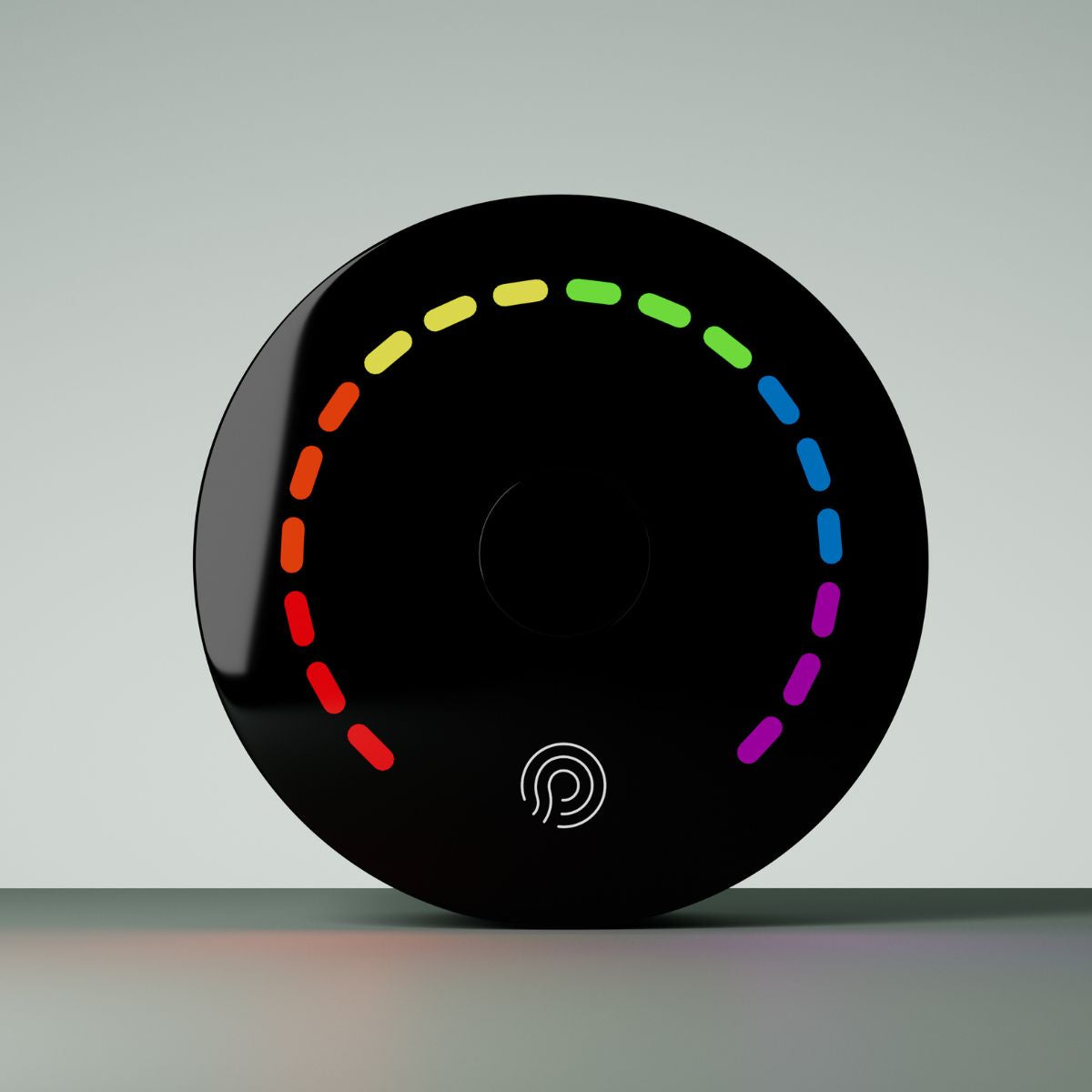
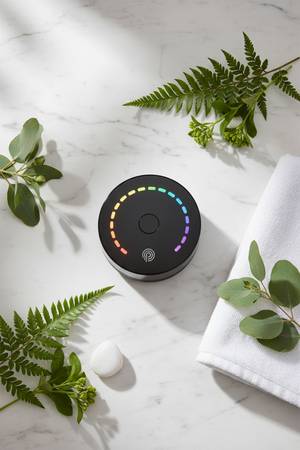
The PRYSM iO is an advanced, non-invasive device using Raman Spectroscopy to measure Carotenoid antioxidant levels in real time. It also shows a colour-based score scale, from lower red/orange ranges through Yellow/Green to Blue and Purple higher ranges.
Learn more about PRYSM iO in my article "Prysm iO Antioxidant Scanner: The Science Behind Nu Skin’s Wellness Technology"
This is what I love about it.
It turns colour into feedback.
Not a diagnosis.
Not a medical test.
Not a judgement.
A baseline.
A way to see whether your daily choices — colour, sleep, stress, exercise, UV exposure, supplementation and consistency — may be shifting your antioxidant status over time.
The Electric Facialist View
Skin health is not only topical.
It is cellular.
It is nutritional.
It is energetic.
It is lifestyle-led.
Your skin is constantly responding to your internal environment: oxidative stress, sleep, inflammation, light exposure, hydration, nutrition and repair.
So when I say eat the rainbow, I am not talking about a trend.
I am talking about feeding the body the pigments, antioxidants and phytonutrients it needs to build resilience from within.
Red for protection.
Orange for glow.
Yellow for light and lutein.
Green for hidden carotenoids.
Purple for antioxidant depth.
And then we measure.
Because the future of beauty is not just about what we apply.
It is about what we can understand.
Measure. Nourish. Glow.
Key Takeaways
Carotenoids are colourful antioxidant pigments found in many red, orange, yellow and green foods.
Red foods such as tomatoes, guava and red peppers are often rich in lycopene and protective plant compounds.
Orange foods such as carrots, pumpkin and sweet potato are rich in beta-carotene and support glow from within.
Yellow and Golden foods connect beautifully to Lutein, Zeaxanthin, eye health and cellular protection.
Dark green leafy vegetables look green but are often rich in yellow carotenoids hidden beneath chlorophyll.
Purple and berry foods bring a wider antioxidant story, especially polyphenols and colour diversity.
Carotenoids absorb best when eaten with healthy fats.
Cooking, chopping and blending can make some carotenoids easier to access.
PRYSM iO helps make antioxidant nutrition more visible by measuring skin carotenoid status over time.